
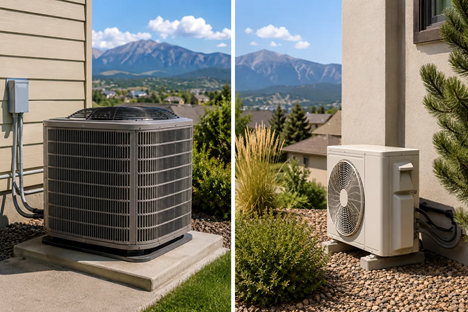
If you are shopping for a new cooling system, the choice between central air conditioning and a ductless mini split is one of the most common decisions Denver homeowners face. Both systems cool effectively, but they work differently, cost differently, and suit different homes. This guide breaks down the key differences so you can make a confident, informed decision before you spend a dime.
How Each System Works
Central air conditioning uses a network of ducts running through your home to distribute cooled air from a single outdoor compressor unit. A blower pushes that air through vents in every room, giving you whole-home coverage from one system.
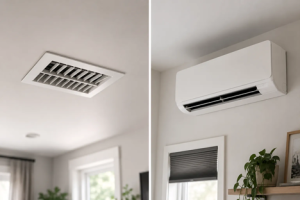
A ductless mini split also uses an outdoor compressor, but instead of ducts, it connects directly to one or more compact indoor air-handling units mounted on the wall or ceiling. Each indoor unit cools the room it is in independently, with no ductwork involved. That simple difference in delivery method drives most of the distinctions between the two systems.
Cost Comparison: Upfront vs. Long-Term
For Denver homeowners, cost is often the first question, and the answer depends on what your home already has.
Central AC tends to cost less to install if you already have a forced-air furnace with existing ductwork in good condition. The equipment and labor investment is spread across a system that handles the whole house at once, which can make the per-room cost competitive.
Mini splits cost more per zone than central AC when you factor in multiple indoor units. However, if your home lacks ductwork or has outdated ducts that would need extensive repair or replacement, a mini split can actually come out ahead. Installing or overhauling ductwork is expensive, and that cost often tips the comparison in the mini split’s favor for older Denver homes or additions.
On the long-term side, mini splits typically win on energy efficiency. The U.S. Department of Energy estimates that duct losses account for 20 to 30 percent of cooling energy in a typical home. Eliminating ducts entirely removes that waste, which shows up as real savings on your Xcel Energy bill month after month.
Comfort Pros provides free system analysis and upfront pricing on both systems, including available financing through Wells Fargo for qualifying homeowners.
Energy Efficiency in the Denver Climate
Denver’s combination of high altitude, dry heat, and wide daily temperature swings creates some specific considerations for HVAC efficiency.
Both central AC and mini splits carry SEER2 (Seasonal Energy Efficiency Ratio) ratings that indicate efficiency. Higher SEER2 means lower operating costs. Modern mini split systems often achieve higher SEER2 ratings than comparably priced central AC units, largely because they skip the duct losses mentioned above.
Colorado altitude also affects system sizing. At 5,280 feet, air is thinner than at sea level, which changes how HVAC systems are sized and how they perform. This is one reason working with a licensed Denver HVAC contractor matters. A system sized correctly for sea level can underperform at Denver’s elevation, regardless of whether it is central or ductless.
Both system types can qualify for Xcel Energy rebates and federal tax credits depending on efficiency ratings. Visit the Comfort Pros rebates page for current incentive details before making your final decision.
Whole-Home vs. Zoned Cooling
This is where the two systems diverge most clearly in day-to-day use.
Central AC cools every room connected to the duct system simultaneously whenever the thermostat calls for it. That is ideal if you want consistent, uniform temperature throughout the home without thinking about it. The tradeoff is that you are cooling rooms nobody is using, which adds to your energy cost.
Mini splits let you cool only the zones you are actually using. A home office, a basement, a guest room that runs hot, or a garage conversion can each have its own independently controlled unit. You set the temperature in occupied rooms and leave unoccupied zones off entirely. For households where different family members want different temperatures, or for homes where certain rooms are only used at certain times, this level of control is a genuine quality-of-life upgrade.
Installation: What the Process Looks Like
Central AC installation typically takes one to two days and involves connecting the outdoor unit, running refrigerant lines, and tying into the existing duct system. If ductwork needs to be extended, repaired, or added, that can add time and cost significantly.
Mini split installation is generally less invasive. A single-zone install usually takes four to eight hours. A small three-inch hole connects the indoor and outdoor units via refrigerant lines and electrical wiring. No major structural work is needed in most cases, which makes it a cleaner, faster install for targeted spaces.
Both system types require licensed installation to comply with Colorado HVAC codes and to protect manufacturer warranties. Comfort Pros handles permits, code compliance, and post-install inspection for every job.
Which System Is Right for Your Denver Home?

Central AC is likely the better fit if:
- Your home already has functional, well-sealed ductwork
- You want uniform, whole-home cooling from a single system
- You prefer one thermostat controlling everything
- You are replacing an aging central system in a home built for forced-air delivery
A mini split is likely the better fit if:
- Your home has no ductwork or outdated ducts in poor condition
- You are adding an addition, finishing a basement, or converting a garage
- You want room-by-room temperature control
- You prioritize energy efficiency and lower monthly operating costs
- You want a system that can also provide efficient heating in shoulder seasons
Many Denver homeowners end up using both: central AC for the main living areas and a mini split for a problem room, a detached structure, or a new addition. A Comfort Pros technician can evaluate your specific layout and recommend the most cost-effective combination during a free system analysis.
Explore the full range of cooling options at Comfort Pros or learn more about home comfort add-ons that complement both system types.
Frequently Asked Questions
Is central AC or a mini split more energy efficient in Denver?
In most cases, a ductless mini split is more energy efficient because it eliminates duct losses, which can waste 20 to 30 percent of a central system’s cooling energy. However, the right answer depends on your home’s existing infrastructure, usage patterns, and the efficiency ratings of the specific models being compared. A Comfort Pros system analysis will run the numbers for your exact situation.
How much does it cost to install central AC vs. a mini split in Denver?
Central AC installation is generally less expensive when existing ductwork is in good shape. A mini split installation can cost more upfront per zone but becomes more competitive when ductwork would need to be installed or extensively repaired. Both systems have financing options and may qualify for rebates that reduce the net cost. Comfort Pros provides transparent, upfront pricing on both before any work begins.
Can a mini split cool my whole Denver home?
Yes, with a multi-zone mini split system. Multiple indoor units connected to one or more outdoor compressors can cover every room in a home. That said, central AC is often more straightforward and cost-effective for whole-home coverage in homes with existing ductwork. The right answer depends on your home’s layout and your budget.
Do mini splits work in Colorado’s dry climate?
Yes. Mini splits perform very well in Colorado’s dry climate. The absence of ductwork actually benefits performance in older Denver homes where ducts may leak conditioned air into unconditioned attic or crawl space areas. Dry conditions also tend to be gentle on outdoor equipment over time.
Does Comfort Pros install both central AC and mini splits in the Denver area?
Yes. Comfort Pros installs, services, and maintains both central air conditioning systems and ductless mini splits throughout Denver, Aurora, Boulder County, and the surrounding metro area. Every job comes with a free system analysis, transparent pricing, and the backing of 40-plus years of combined HVAC experience.
Still Not Sure Which Way to Go? Comfort Pros Can Help.
Choosing between central AC and a mini split does not have to be a guessing game. Comfort Pros will evaluate your home, your existing equipment, and your budget and give you an honest recommendation with no pressure either way. That is the family-owned difference.
With 575-plus five-star Google reviews and decades of experience serving Denver homeowners, we have seen every home type and every scenario.
