
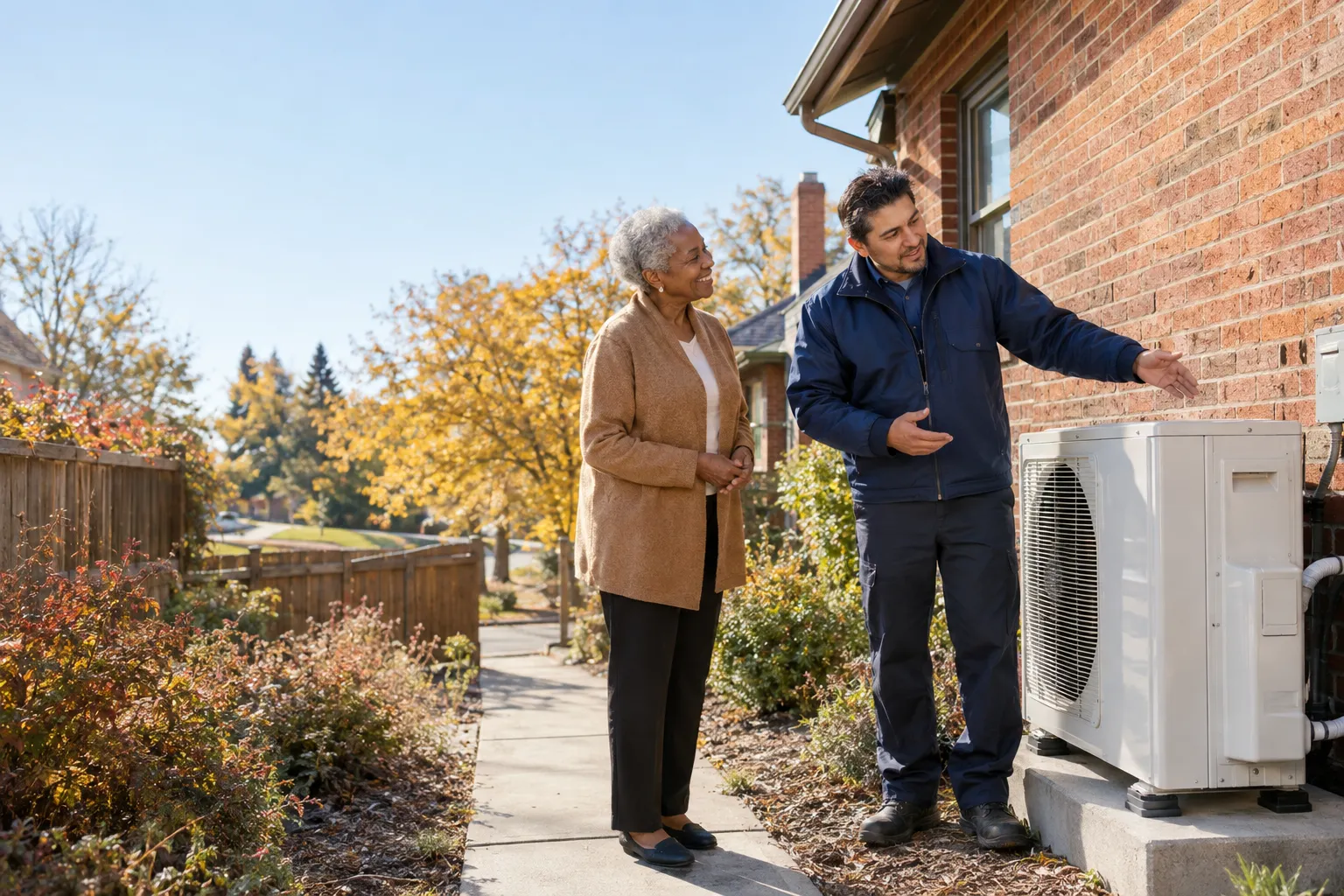
Quick Answer: For most Denver homes in 2026, a cold-climate heat pump or a dual-fuel system (heat pump plus gas furnace backup) is the smarter long-term choice. Modern cold-climate heat pumps maintain full capacity down to 5 degrees F and operate to -15 degrees F, covering 80 to 90 percent of Denver’s heating hours efficiently. Colorado state rebates and Xcel Energy incentives are still active in 2026.
If your heating system is aging and you are weighing what to replace it with, you have never had more good options or more to think through. For Denver homeowners who care about efficiency, lower Xcel Energy bills, and their environmental footprint, the comparison between a heat pump and a gas furnace has never been closer. Here is an honest breakdown of how each system performs in Colorado’s climate, what it costs, and which incentives remain active in 2026.
How Each System Heats Your Denver Home
How a Heat Pump Works
A heat pump moves heat rather than generating it. Using refrigerant, it extracts heat energy from outdoor air and transfers it inside, delivering 300 to 400 percent efficiency, meaning three to four units of heat for every unit of electricity consumed. Modern cold-climate models are engineered to extract usable heat even in sub-zero outdoor air. They also reverse in summer to provide cooling, replacing both your furnace and central AC with one system.
How a Gas Furnace Works
A high-efficiency gas furnace combusts natural gas to produce heat and distributes it through your ductwork. A 95 percent AFUE furnace converts 95 cents of every gas dollar into usable heat. Its advantage is consistent, powerful output at any outdoor temperature. When Denver hits 5 degrees at 2 a.m. in January, a gas furnace heats your home without hesitation or efficiency loss.
Can a Heat Pump Handle a Colorado Winter?
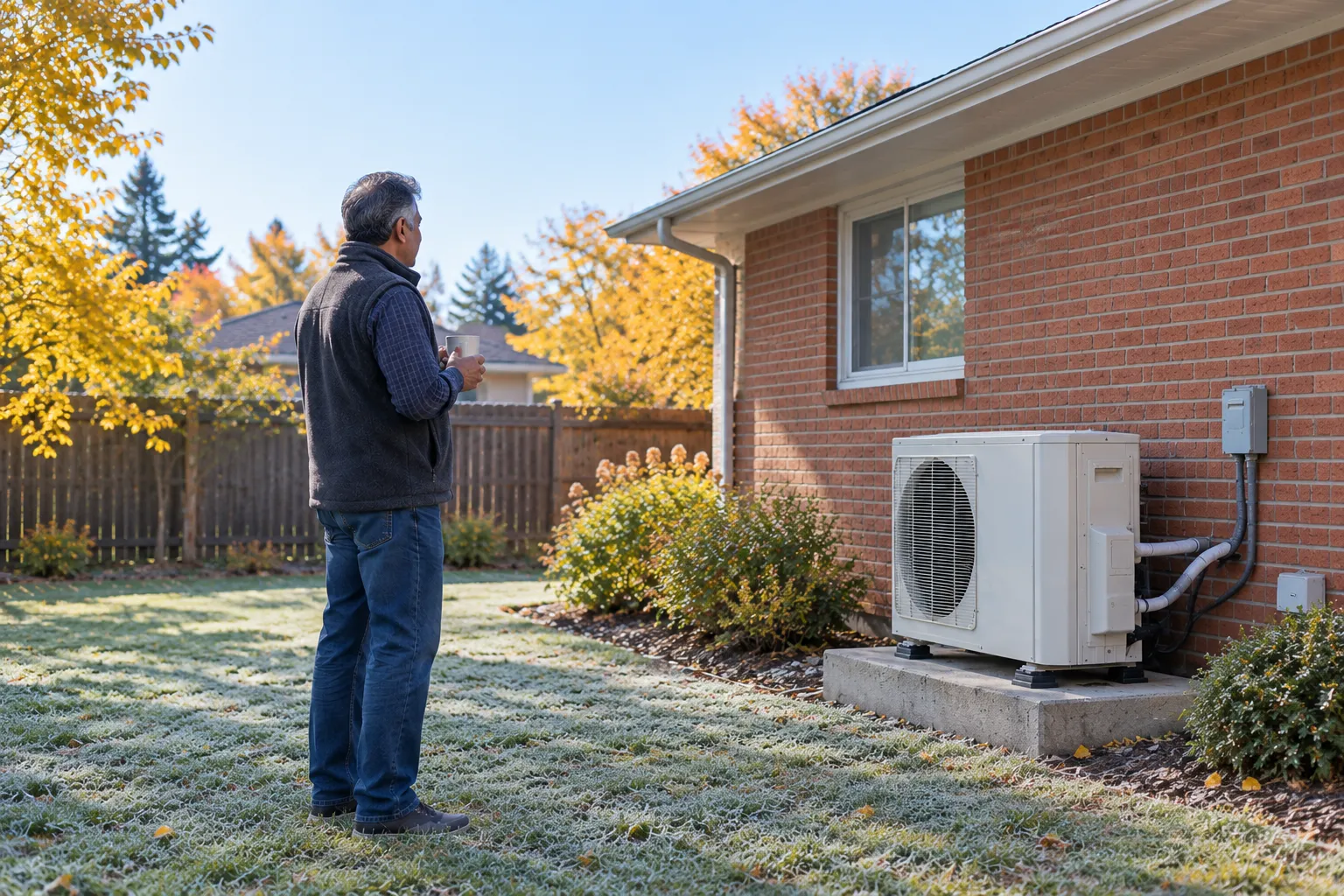
Yes, with important nuance. Modern cold-climate heat pumps maintain full capacity down to 5 degrees F and continue operating to -15 degrees F. Denver experiences roughly 10 to 20 sub-zero days per year when a heat pump benefits from backup heat. But the vast majority of Denver winter days fall in the 15 to 40 degree range, where a cold-climate heat pump runs at strong efficiency.
| Outdoor Temp Range | Heat Pump Performance | Gas Furnace Performance |
| Above 35 degrees F | Excellent, peak efficiency | Full output |
| 15 to 35 degrees F | Very good, mild reduction | Full output |
| 0 to 15 degrees F | Good, backup recommended | Full output |
| Below 0 degrees F | Declining, backup needed | Full output |
Denver’s climate is well suited for modern cold-climate heat pumps. The majority of Denver winter days fall in temperature ranges where a heat pump outperforms a furnace on efficiency, while gas backup covers the coldest stretches.
Cost to Install and Operate in Denver

Costs depend on home size, existing equipment, and current utility rates. Here is a realistic range for Denver metro installations:
| System | Typical Installed Cost | Annual Heating Cost (Est.) |
| Gas furnace only (95% AFUE) | $3,500 to $6,500 | $800 to $1,200 |
| Cold-climate heat pump only | $5,000 to $10,000 | $900 to $1,500 |
| Dual-fuel system | $8,000 to $14,000 | $700 to $1,100 |
Heat pump operating costs in Denver can run higher or lower than a gas furnace depending on how Xcel electricity rates compare to natural gas prices in a given year. The efficiency advantage is most pronounced on moderate-temperature days, which make up the majority of a Colorado winter. A heat pump also replaces your central AC, making the installed cost comparison more favorable when you factor in avoiding a separate AC replacement.
Comfort Pros provides transparent, upfront pricing after a free system analysis. Financing is available at finance.
2026 Colorado Rebates and Incentives
Federal Section 25C credit: expired. The federal energy efficiency tax credit was terminated by the One Big Beautiful Bill Act for heat pumps installed after December 31, 2025. If you installed a qualifying system in 2025, you can still claim it on your 2025 return. For 2026 installations, the federal 25C pathway is closed.
What remains active in 2026:
Colorado’s state heat pump tax credit is still in effect. For air-source heat pumps installed in 2026, the credit is $1,000, applied as an upfront discount by your registered contractor.
Xcel Energy rebates continue. Cold-climate heat pumps qualify for $750 per heating ton through a qualified contractor. For a typical 3-ton system, that is $2,250 from Xcel alone.
HEAR rebates from the Inflation Reduction Act remain available for income-qualified households, up to $8,000 for qualifying heat pump installations. These can be stacked with the Colorado state credit and Xcel rebates.
Stacking available programs can substantially close the upfront cost gap between a heat pump and a gas furnace. Visit rebates for current program details.
The Dual-Fuel Option: Denver’s Sweet Spot
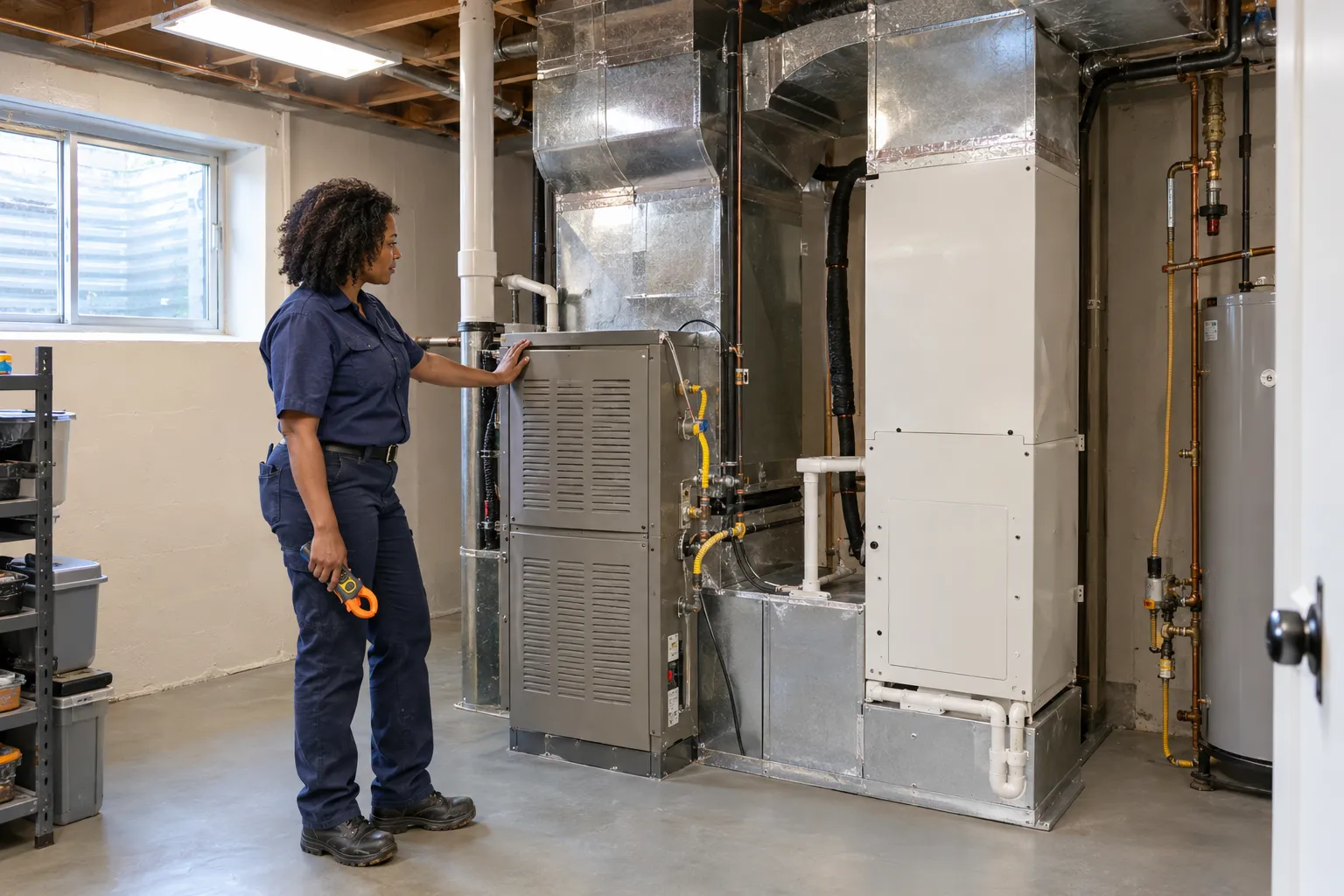
A dual-fuel system pairs a cold-climate heat pump with a gas furnace backup. The heat pump handles all your summer cooling and the vast majority of your winter heating efficiently. The furnace activates automatically when outdoor temperatures drop into the single digits, providing reliable heat on Denver’s coldest nights without burdening the heat pump.
The result is lower energy bills across most of the year plus the peace of mind of a gas furnace for polar vortex nights. If you are replacing both your furnace and your central AC at the same time, a dual-fuel system is almost always worth evaluating. Comfort Pros can run the numbers for your home during a free system analysis at heating.
Which System Is Right for Your Denver Home?

A cold-climate heat pump fits best if:
- You want to reduce or eliminate natural gas usage
- You are replacing both your AC and furnace at the same time
- You want to capture Colorado state rebates and Xcel Energy incentives
- Your home is well insulated with good ductwork
A gas furnace fits best if:
- Your AC is new and you only need to replace the furnace
- Upfront cost is the primary constraint and rebates do not close the gap enough
- You want the most reliable performance on Denver’s coldest 10 to 20 days per year
A dual-fuel system fits best if:
- You want maximum year-round efficiency without sacrificing cold-day comfort
- You are open to a higher upfront investment for long-term savings
- You want to capture 2026 incentives while keeping gas as a backup
Frequently Asked Questions
Do heat pumps actually work in Denver winters?
Yes. Modern cold-climate heat pumps perform well across most of Denver’s winter temperature range. Full capacity holds to 5 degrees F, with continued operation to -15 degrees F. Backup heat is recommended for the approximately 10 to 20 sub-zero days Denver sees annually.
Is a heat pump cheaper to run than a gas furnace in Denver?
It depends on outdoor temperature and current utility rates. Heat pumps are significantly cheaper on moderate winter days due to their efficiency advantage. On the coldest nights, gas often costs less per unit of heat. A dual-fuel system optimizes this automatically by switching fuel sources at a set outdoor temperature.
Is the federal heat pump tax credit still available in 2026?
No. The Section 25C credit expired for equipment installed after December 31, 2025. Colorado’s state tax credit ($1,000 for air-source heat pumps) and Xcel Energy rebates remain active. HEAR rebates are still available for income-qualified households.
How long does a heat pump last compared to a furnace in Colorado?
Gas furnaces typically last 20 to 30 years. Heat pumps typically last 15 to 20 years. However, a heat pump replaces both your furnace and AC, making the lifecycle cost comparison more nuanced than lifespan numbers alone.
Does Comfort Pros install heat pumps and dual-fuel systems in the Denver metro area?
Yes. Comfort Pros installs and services cold-climate heat pumps, gas furnaces, and dual-fuel systems throughout Denver, Aurora, Boulder County, and the surrounding metro area. Every job includes a free system analysis and transparent, upfront pricing. Call 303-945-4319 or book at comfortpros.net.
Ready to Make the Right Call for Your Denver Home?
The heat pump versus furnace decision is not one-size-fits-all in Denver’s high-altitude, variable climate. Comfort Pros will evaluate your home, your existing equipment, your utility rates, and your goals and give you an honest recommendation with no pressure.
