

Quick Answer: Denver homeowners in 2026 can combine the new Power Ahead Colorado rebate ($1,500), Xcel Energy utility rebates, the Colorado HEAR program (up to $8,000 for qualifying households), and the Colorado state heat pump tax credit ($1,000) to offset thousands on a new heat pump. Stacking these programs is legal and encouraged. A verified contractor is required for most programs.
Fall is the right time to think about heating upgrades, and 2026 is one of the better years Denver homeowners have seen for heat pump incentives. A brand-new regional program launched this year, utility rebates are still running, and a state credit is available for anyone who qualifies. Here is what is currently on the table, how to stack it, and what you need to do to get the money.
What Is the Power Ahead Colorado Rebate?
Power Ahead Colorado is a regional rebate program launched in January 2026 by the Denver Regional Council of Governments (DRCOG). It draws on nearly $200 million in federal funds aimed at reducing pollution across the Denver metro area.
Denver-area homeowners can receive up to $1,500 toward a qualifying heat pump installation through this program. The rebate is available for existing homes and apartments but not new construction. To access it, you need to work with a verified contractor from the program’s approved list (roughly 50 contractors were approved as of mid-2026).
The best part: Power Ahead Colorado is designed to be combined with other incentives. DRCOG confirmed that Xcel Energy rebates and state credits can all be layered on top.
What Does Xcel Energy Offer Denver Homeowners?

If you get your electricity from Xcel Energy (most of Denver metro does), you qualify for utility rebates that vary based on system type.
| System Type | Xcel Energy Rebate |
| Standard air source heat pump | $300 per cooling ton |
| Cold-climate heat pump | $750 per heating ton |
| Heat pump water heater | Separate rebate available |
A typical 3-ton cold-climate heat pump installation comes out to around $2,250 in Xcel rebates alone. Amounts are applied at the time of installation when you use an Xcel participating contractor. You can verify current amounts through Xcel or ask Comfort Pros to confirm at the time of your free system analysis.
For homeowners outside Xcel territory, United Power offers rebates up to $2,500 for qualifying heat pump systems.
Does Colorado Have a State-Level Heat Pump Incentive?
Yes. Two programs apply depending on your household income.
Colorado State Heat Pump Tax Credit
Any Colorado homeowner who installs a qualifying air-source heat pump can claim a $1,000 state income tax credit. Ground-source or water-source systems qualify for a higher $2,000 credit. This is a credit against your state tax liability, so it directly reduces what you owe when you file.
HEAR Program (Home Electrification and Appliance Rebate)

For households at or below 150% of the Area Median Income (AMI), Colorado’s HEAR Program provides point-of-sale rebates that are far larger:
- Up to $8,000 for a heat pump (space heating and cooling)
- Up to $1,750 for a heat pump water heater
- Up to $14,000 total across all eligible upgrades
Your contractor can help confirm eligibility before installation. More details at rebates.
What About the Federal 25C Tax Credit?
The federal Energy Efficient Home Improvement Credit (25C), which covered up to 30% of heat pump costs, was repealed at the end of 2025. It is not available for installations completed in 2026.
That is a real loss, but the state and regional programs above were built partly to compensate. For most Denver homeowners, combining Power Ahead Colorado, Xcel Energy, and the state credit still produces a meaningful offset against installation costs.
How Much Can Denver Homeowners Save in 2026?

Here is a realistic stacking example for a mid-income homeowner upgrading to a 3-ton cold-climate heat pump:
| Incentive | Estimated Amount |
| Power Ahead Colorado rebate | $1,500 |
| Xcel Energy (cold-climate, 3 tons) | $2,250 |
| Colorado state tax credit | $1,000 |
| Total Offset | $4,750 |
An income-qualifying household using the HEAR Program instead of the state credit could do considerably better. These numbers assume confirmed eligibility and installation by a verified contractor. Visit heat-pumps to get a net cost estimate for your home.
What Qualifies for These Rebates?
Not every heat pump on the market qualifies for every program. Most 2026 Colorado rebates require:
- ENERGY STAR certification with a cold-climate rating
- HSPF2 rating of at least 7.5 (most cold-climate models meet this)
- Installation by an approved or certified contractor
- Existing structures only (Power Ahead Colorado excludes new builds)
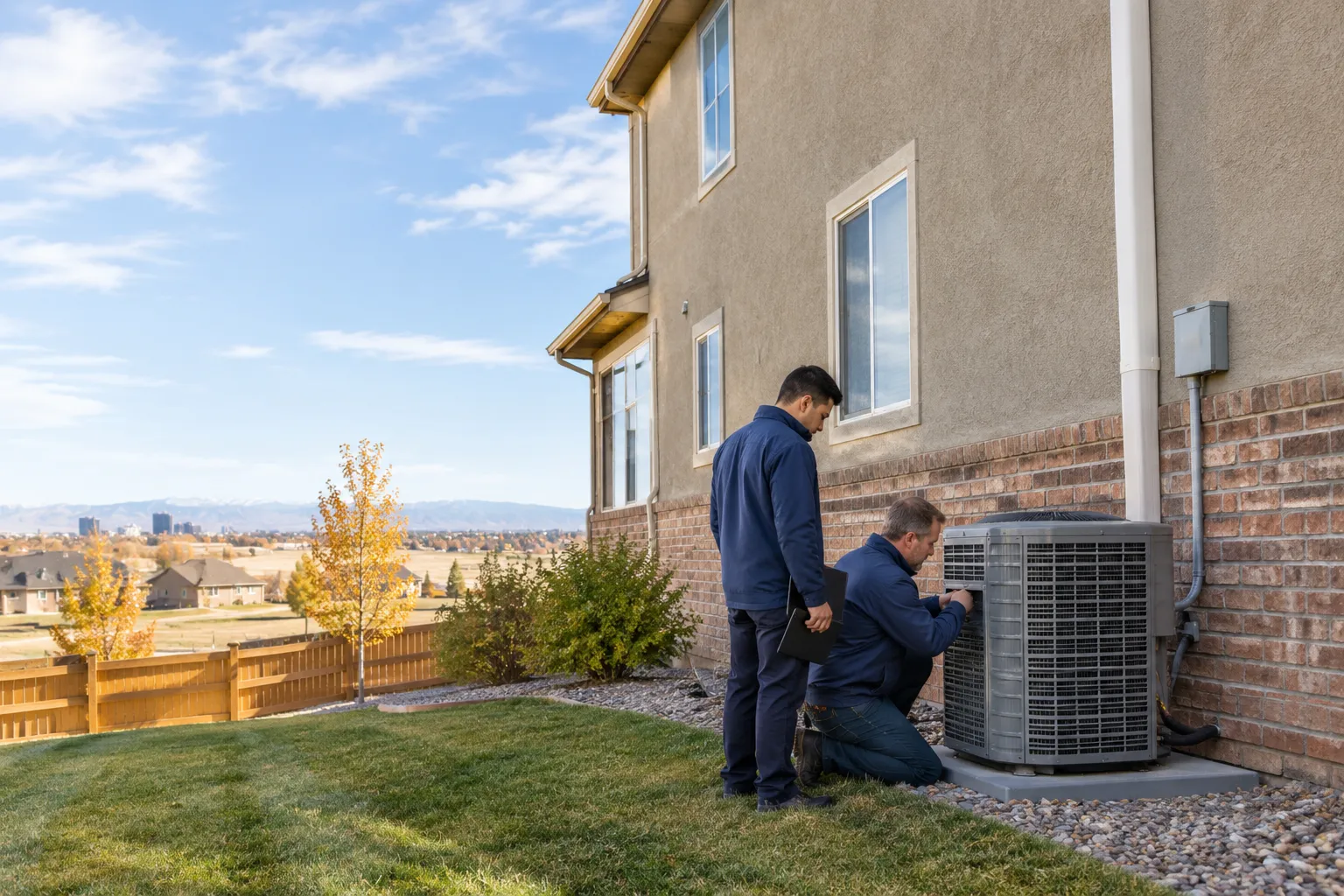
Comfort Pros installs Trane heat pump systems that meet all current certification thresholds. We confirm compatibility with each program before your installation begins. See our heat pump services or explore financing options if you want to move before winter.
Frequently Asked Questions
Can I stack multiple heat pump rebates in Denver?
Yes. Power Ahead Colorado, Xcel Energy rebates, and the Colorado state tax credit are all stackable. The HEAR Program replaces rather than stacks with the state credit for income-qualifying households. A Comfort Pros advisor can map out which combination fits your situation.
How do I apply for the Power Ahead Colorado rebate?
You apply through a verified contractor at the time of installation. The contractor submits the rebate paperwork on your behalf. Contact Comfort Pros at 303-945-4319 to confirm participation in your area.
Is the federal heat pump tax credit still available in 2026?
No. The federal 25C tax credit was repealed at the end of 2025 and does not apply to 2026 installations. The state and regional programs listed above are the current options for Denver homeowners.
What is the Colorado HEAR Program income limit?
Households at or below 80% of Area Median Income (AMI) receive the full rebate. Those between 80% and 150% AMI may receive partial rebates. The Colorado Energy Office website has current AMI tables by county.
The Bottom Line
Heat pump incentives in 2026 look different than they did two years ago, but there is still real money on the table. Power Ahead Colorado ($1,500), Xcel Energy rebates (up to $2,250 or more), and the Colorado state tax credit ($1,000) stack to nearly $5,000 for a typical Denver homeowner. Income-qualifying households can do significantly better.
Fall is the best window to move. Systems go in before the first hard freeze, and contractors are easier to schedule now than in January when everyone’s furnace is failing.
Schedule a free system analysis with Comfort Pros to confirm which programs apply to your home and get a real net cost before you commit. Call 303-945-4319 or book at comfortpros.net.
