
Quick Answer: The five clearest signs your AC is low on refrigerant are warm or lukewarm air from vents, ice on the refrigerant lines or indoor coil, a hissing or bubbling sound near the unit, the system running constantly without reaching set temperature, and an unexplained spike in your energy bill. Low refrigerant always means a leak, not normal depletion. Only a licensed HVAC technician can legally locate the leak, repair it, and recharge the system.
In the middle of a Denver summer, your AC is not something you want guessing at. If it is running but not cooling, low refrigerant is one of the most likely causes and one of the most misunderstood. Refrigerant does not get used up like fuel. If your system is low, there is a leak somewhere, and ignoring it makes things worse. Here are the five clearest signs to watch for right now, and what to do next.
Why Low Refrigerant Always Means a Leak
A properly sealed AC system runs on the same refrigerant charge for its entire lifespan without needing a top-off. If a technician tells you your system is low, refrigerant is escaping through a crack, a faulty valve, a loose fitting, or coil corrosion.
Topping up refrigerant without fixing the leak is a temporary fix. The charge will drop again, your system will underperform again, and you will pay for another service call. The right repair addresses the source first, then recharges to the correct level.
At Denver’s altitude of 5,280 feet, refrigerant charge levels also need to be calibrated for lower air density. A system undercharged at sea-level spec performs even worse in Denver. Working with a technician who understands local conditions is not just convenient, it matters for the repair to hold correctly.
Sign 1: Warm or Lukewarm Air From Your Vents

If your system is running and the thermostat is calling for cool air but the air from your vents is warm or tepid, low refrigerant is near the top of the diagnostic list. Refrigerant absorbs heat from indoor air and transfers it outside. Without enough of it, that heat exchange is incomplete and your air handler pushes out air that never got properly cooled. The compressor keeps running because it cannot satisfy the thermostat, which leads directly to the next sign.
Sign 2: Ice on the Refrigerant Lines or Indoor Coil
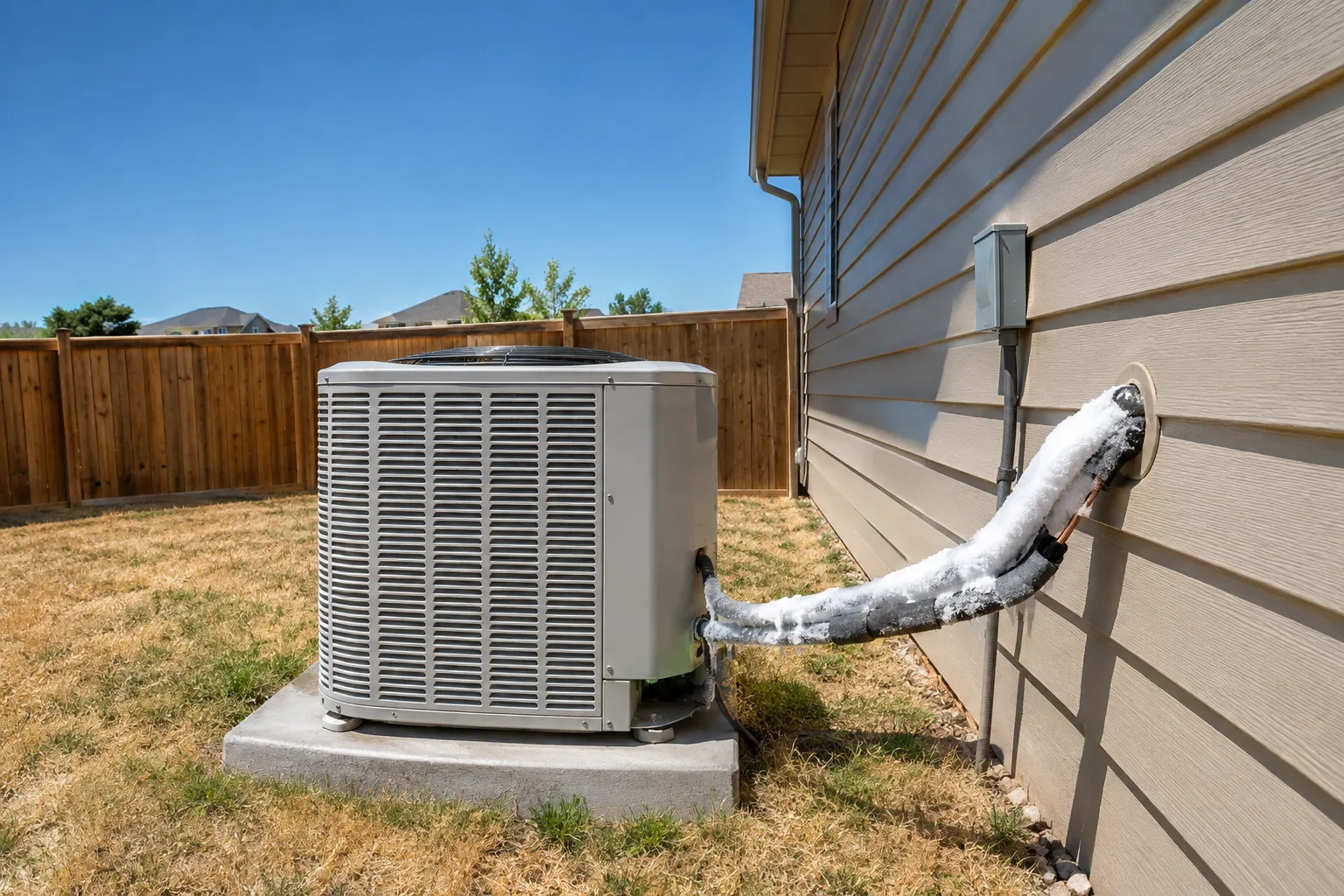
When refrigerant pressure drops too low, the evaporator coil gets colder than it should, moisture in the air freezes on contact, and ice builds up on the coil and refrigerant lines. You may see frost on the copper lines near your indoor unit or ice near the outdoor unit connections.
If you see ice forming, turn your system off immediately and call a technician. Running an iced-up system risks damaging the compressor, which is one of the most expensive components to replace.
Sign 3: Hissing or Bubbling Sounds Near the Unit
Refrigerant escaping through a leak produces sound. A hissing noise near the indoor or outdoor unit typically indicates refrigerant leaking as a gas. A bubbling or gurgling sound often means air is entering the refrigerant line at the leak point.
These sounds are not always loud or constant. If you hear something that was not there before, especially combined with reduced cooling, it is worth a call. Early leak detection leads to simpler, less expensive repairs.
Sign 4: Your AC Runs Constantly but Never Cools the House

A system that cannot satisfy the thermostat will keep running indefinitely trying to catch up. If your Denver home sits consistently above your set temperature and the system never cycles off, low refrigerant is a strong suspect.
This symptom is also hard on your Xcel Energy bill. A system running continuously at reduced efficiency uses far more electricity than a unit cycling normally. The longer it continues, the more wear accumulates on the compressor and blower motor, shortening the system’s lifespan.
If your AC runs all day without reaching temperature on a typical Denver summer day, not during a record heat event, something is wrong and needs professional attention.
Sign 5: Your Energy Bill Has Spiked Without Explanation
A refrigerant leak that develops gradually can cause a slow decline in efficiency before any single obvious symptom appears. If your Xcel Energy bill has climbed noticeably compared to the same period last summer, and you have not changed your thermostat habits, that efficiency loss may be your earliest warning sign.
Pair a higher-than-normal bill with any of the other four symptoms and the picture becomes clearer. Low refrigerant makes your system work harder, run longer, and cost more, all while delivering less comfort.
Can I Add Refrigerant Myself?
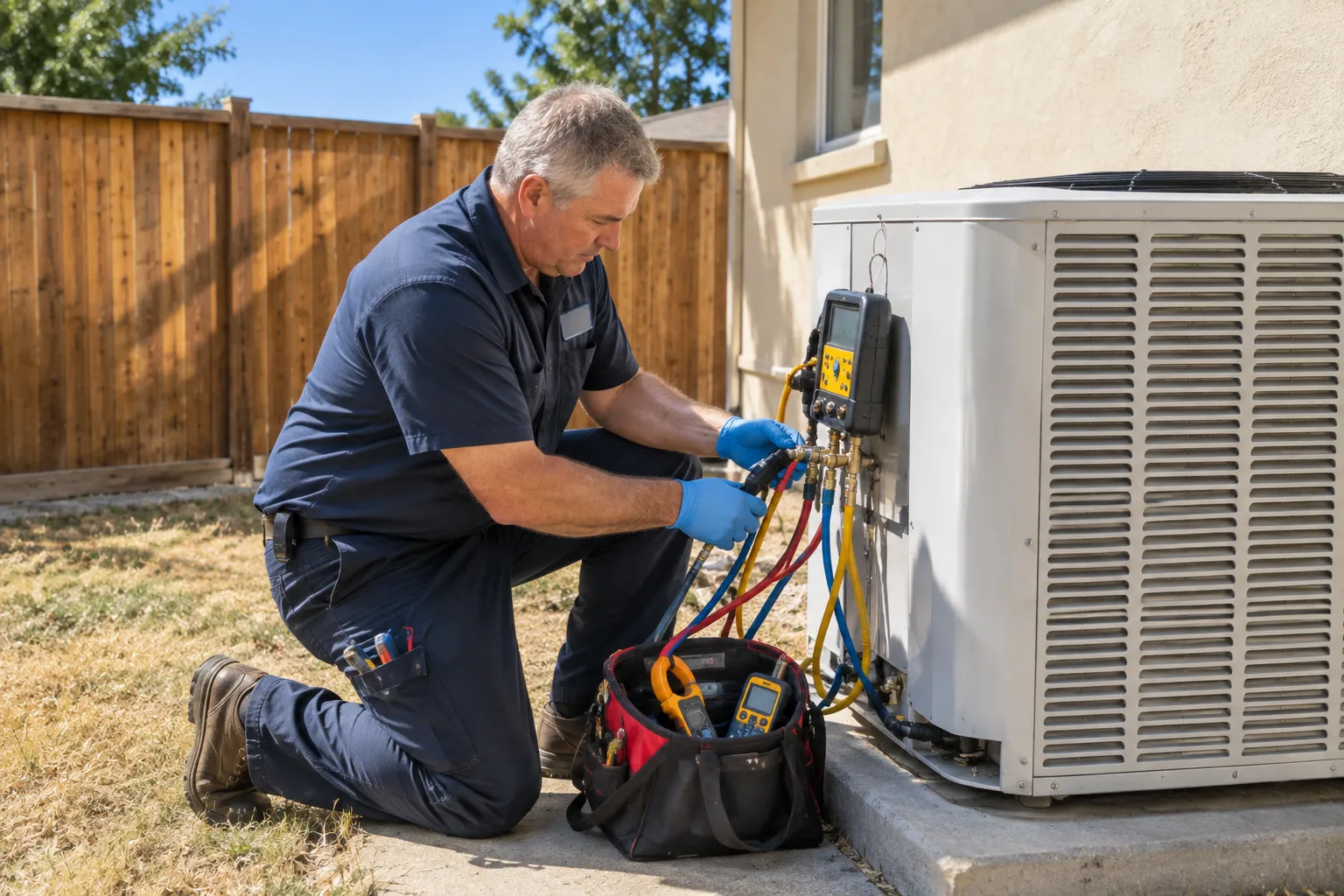
No. Federal law requires EPA Section 608 certification to purchase, handle, or recharge refrigerant. Beyond legality, refrigerant operates under high pressure and requires specialized gauges to measure charge accurately at Denver’s altitude. An overcharged system damages the compressor just as an undercharged one does.
Comfort Pros technicians are EPA certified, carry proper recovery equipment, and locate and fix the leak before recharging so the repair actually holds. Visit Comfort Pros to learn more about our AC repair and refrigerant services.
Repair or Replace? What a Refrigerant Leak Tells You

A leak on a newer system is typically a repair worth making. The calculation changes on older equipment:
- System under 10 years old with a first leak: repair and recharge is almost always the right call
- System 10 to 15 years old: evaluate repair cost against replacement using the 50% rule
- System over 15 years old or using R-22 refrigerant (no longer manufactured, expensive to source): replacement is usually more cost-effective
Comfort Pros will give you an honest assessment of both options. If replacement makes sense, explore financing at comfort Pros and current rebates. For a deeper look, read our AC repair vs. replace guide.
Frequently Asked Questions
How much does it cost to fix a refrigerant leak in Denver?
Costs depend on where the leak is, how accessible it is, and what refrigerant your system uses. A minor line set repair plus recharge typically runs less than a coil repair or replacement. Comfort Pros provides transparent, upfront pricing after diagnosing the leak before any work begins.
How long can I run my AC if it is low on refrigerant?
You should not. Running an undercharged system puts serious stress on the compressor. In a worst case, the compressor seizes and a refrigerant repair becomes a full system replacement. Turn the system off and call a technician the same day.
What refrigerant does my AC use?
Systems built before 2010 typically use R-22 (no longer produced, expensive to source). Systems from 2010 to 2024 generally use R-410A. Systems built from 2025 onward use R-454B under new EPA regulations. Your system’s refrigerant type is listed on the nameplate of the outdoor unit.
Can low refrigerant damage my AC permanently?
Yes, if the system runs long enough undercharged. The compressor operates outside its designed pressure range, overheats, and can fail permanently. Early diagnosis and repair prevents this outcome in the vast majority of cases.
Does Comfort Pros offer same-day AC refrigerant repair in Denver?
Comfort Pros serves Denver, Aurora, Boulder County, and the surrounding metro area and works to get to customers promptly during peak summer season. Call 303-945-4319 to check same-day availability or book online at comfortpros.net.
Do Not Let a Refrigerant Leak Ruin Your Summer
Low refrigerant does not fix itself. The longer it goes unaddressed, the more your system strains, the more you pay in energy costs, and the closer your compressor gets to a failure that costs far more than a timely repair.
Comfort Pros is a family-owned Denver HVAC company with 40-plus years of combined experience and 575-plus five-star Google reviews. Every service call starts with an honest diagnosis and ends with transparent pricing before any work begins.
Call 303-945-4319 or book online at comfortpros.net. A Comfort Pros technician will find the leak, fix it right, and get your home cool again.
