
Quick Answer: A whole-home humidifier integrates directly into your HVAC system to maintain indoor humidity between 30 and 50 percent throughout every room, automatically. In Denver’s high-desert climate, where indoor humidity can drop below 15 percent in winter, it’s one of the highest-impact comfort upgrades a homeowner can make. Equipment and installation typically costs between $700 and $2,000 depending on system type and home size.
If you just bought an older Denver home and your skin feels like sandpaper by February, you’re not imagining things. Denver’s mile-high altitude and semi-arid climate create some of the driest indoor air in the country, and your furnace makes it worse every time it runs. A whole-home humidifier, installed directly into your existing HVAC system, is the most effective way to fix this without filling and emptying a tank every two days. Here’s what you need to know before you call a pro.
What Makes Denver’s Indoor Air So Dry?

Denver’s indoor air gets punishingly dry for a few reasons that compound each other. At 5,280 feet, the atmosphere holds less moisture than at sea level. On top of that, Colorado sits in a semi-arid climate zone where outdoor relative humidity frequently drops below 15 percent in winter. When your furnace draws that already-dry outdoor air in and heats it to 70 degrees, indoor humidity can fall below 10 percent, drier than the Sahara Desert on an average day.
How Dry Is Too Dry?
The U.S. EPA recommends keeping indoor humidity between 30 and 50 percent for health and comfort. Most Denver homes in winter fall well short of that without intervention.
| Condition | Relative Humidity | What You Notice |
| EPA recommended range | 30% to 50% | Comfortable, healthy air |
| Denver winter average (no humidifier) | 10% to 20% | Dry skin, static, nosebleeds |
| Outdoor Denver winter air | Below 15% | The source of the problem |
| Mold risk threshold | Above 60% | Not a Denver problem |
The table makes a clear case. Denver homeowners aren’t dealing with slightly low humidity. They’re often dealing with half the minimum recommended level.
What Are the Health and Home Benefits?

Dry indoor air affects more than comfort. It affects health, your home’s structure, and even your heating bill.
Health Benefits
- Dry nasal passages crack more easily, making it easier for viruses and bacteria to enter your system
- Proper humidity (35 to 45 percent) keeps mucous membranes hydrated, soothing the classic “Colorado cough,” dry throats, and frequent nosebleeds
- Research suggests increasing indoor humidity from 20 to 40 percent can meaningfully reduce airborne influenza transmission
- Asthma and allergy symptoms are frequently worsened by overly dry air
Home Protection Benefits
- Hardwood floors shrink and develop gaps in dry air, and the damage is often irreversible
- Wood furniture, cabinetry, and trim can crack or warp over a winter season
- Dry air increases static electricity, a nuisance for people and a risk for sensitive electronics
- Musical instruments, including guitars and pianos, are particularly vulnerable to humidity swings
Energy Savings
Humid air holds heat more effectively than dry air. Maintaining 35 to 40 percent indoor humidity means you can feel just as comfortable at 68 degrees as you would at 72 degrees in dry air. That gap translates to real savings on your Xcel Energy bill over a full heating season, partially offsetting the system’s operating cost.
Whole-Home vs. Portable Humidifier: Which Actually Works?
This is the most common question first-time buyers ask, and the answer is straightforward.
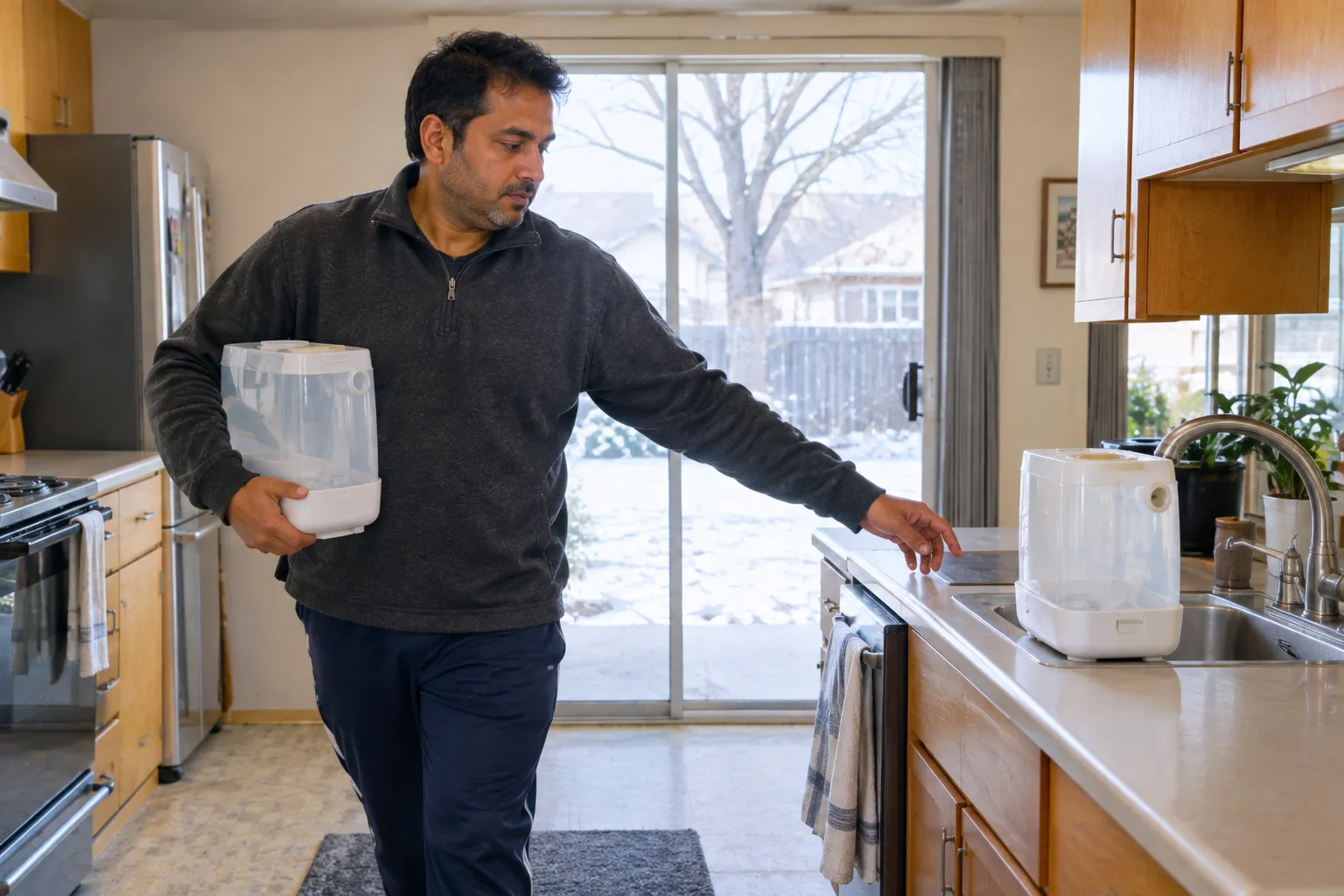
A portable humidifier treats one room at a time. To cover a 2,000-square-foot Denver home, you’d need four to six units running continuously, each requiring daily refills, frequent cleaning to prevent mold and mineral buildup, and ongoing filter replacements. The total energy draw and maintenance burden adds up fast.
A whole-home humidifier connects directly to your HVAC system and water supply. It adds moisture to all the air passing through your ductwork automatically, controlled by a humidistat that maintains your target humidity level without you touching anything. There’s no tank to refill and no unit to move.
For Denver homeowners planning to stay in their home for more than a year or two, the whole-home system is the better investment on every measure: coverage, convenience, efficiency, and long-term cost.
You can learn more about how humidifiers pair with other indoor air quality.
What Types Are Available and What Do They Cost?
There are three main types of whole-home humidifiers, and the right one depends on your HVAC setup and your home’s size.
Bypass Humidifier
Works with your furnace’s airflow by passing air over a water panel. It’s the most affordable option and works well for most Denver homes with a standard gas furnace. Requires the furnace fan to be running to add moisture.
Fan-Powered Humidifier
Has its own fan, so it can humidify even when the furnace isn’t actively heating. This makes it more effective in mild weather and better suited for larger homes. Slightly more expensive than bypass models.
Steam Humidifier
Produces its own steam independently of the HVAC system, which makes it the most precise and powerful option. It works in homes with or without traditional ductwork, including those with boiler systems or mini splits. Higher upfront cost but the most consistent performance.
Typical Cost Range in Denver (Equipment + Installation):
| Type | Equipment Cost | Installed Cost (Approx.) |
| Bypass humidifier | $150 to $400 | $500 to $900 |
| Fan-powered humidifier | $250 to $600 | $700 to $1,200 |
| Steam humidifier | $400 to $1,000 | $900 to $2,000 |
Comfort Pros provides transparent, upfront pricing after a free system analysis so you know exactly what to expect. Financing is available through Wells Fargo for qualifying homeowners .
Some high-efficiency HVAC upgrades that include humidification components may also be eligible for Xcel Energy rebates.
Frequently Asked Questions
How dry is Denver air in winter, exactly?
Outdoor relative humidity in Denver frequently drops below 15 percent in winter. When your furnace heats that air, indoor humidity can fall below 10 to 15 percent, which is well below the EPA-recommended 30 to 50 percent range. Without a humidifier, most Denver homes spend the entire heating season in uncomfortable, unhealthy dry-air conditions.
Will a whole-home humidifier cause mold in my Denver home?
Not when properly sized and controlled. A humidistat keeps indoor humidity within the recommended 30 to 50 percent range automatically. Mold becomes a risk above 60 percent, which is not a problem in Denver’s dry climate. Correct installation and annual maintenance prevent any moisture-related issues.
How much maintenance does a whole-home humidifier need?
Very little compared to portable units. Most systems need an annual water panel or pad replacement, typically done during a fall HVAC tune-up. Steam units may need periodic cleaning of the steam canister. Comfort Pros includes humidifier checks as part of our standard heating system maintenance visits at comfortpros.net/heating/.
Can a humidifier work with my mini split or boiler system?
Yes. Steam humidifiers in particular work independently of forced-air systems and can be installed in homes with mini splits, boilers, or radiant heat. If you have a non-ducted system, a steam model is usually the recommended choice. A Comfort Pros technician will confirm the right fit during your free system analysis.
Does Comfort Pros install whole-home humidifiers in the Denver metro area?
Yes. Comfort Pros installs and services whole-home humidifiers throughout Denver, Aurora, Boulder County, and surrounding communities. Call 303-945-4319 or book online at comfortpros.net.
Stop Tolerating Dry Denver Air This Winter
A whole-home humidifier won’t show up on a home inspection report, but it’s one of the first things longtime Denver homeowners wish they had installed sooner. The benefits across health, home preservation, and heating efficiency make it a practical upgrade, not a luxury.
