
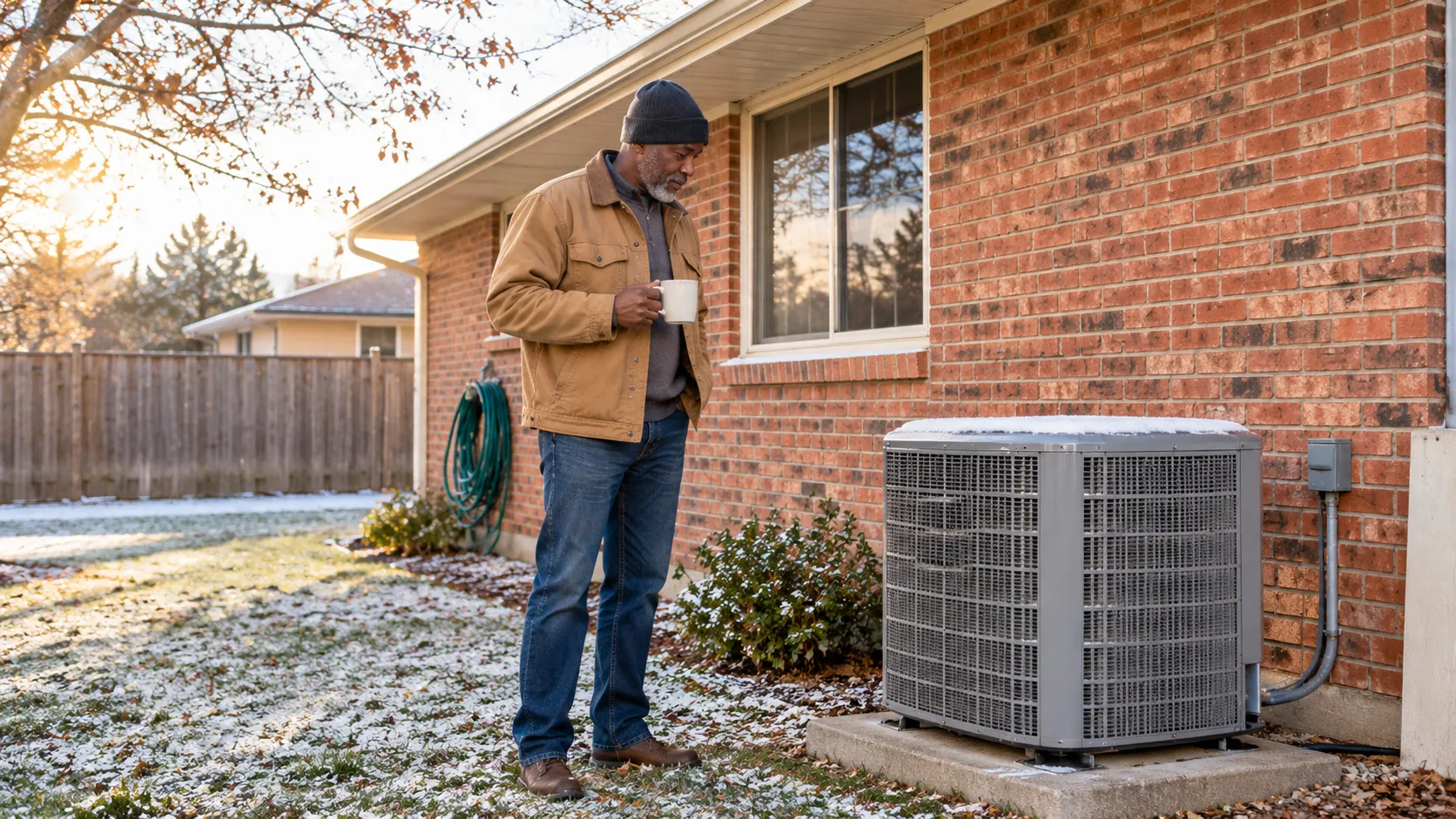
No, most Colorado homes don’t need to cover the outdoor AC unit in winter, and a tight wrap can cause rust, mold and pests. If you’re asking should I cover my AC unit in winter, the answer depends on what you own: a heat pump must never be wrapped, and a cooling-only AC is fine bare or with a breathable top cover. Denver’s first measurable snow usually lands around October 19, so your unit sees real snow, but it’s built for it. Below: what to do instead, and when to call us.
Want your AC checked before spring? Book a tune-up online or call (303) 945-4319. 5.0 from 678 Google reviews.
Check this first: do you have a heat pump?
A heat pump runs all winter to heat your home, so its outdoor unit needs open air on every side. Never put a solid cover on it. Not sure what you have? Look for “heat pump” on the model label, or ask us.
Should I cover my AC unit in winter? The short answer
For most homes, no. Outdoor units are built with weather-resistant finishes and drainage meant for rain, snow and ice. Lennox and independent HVAC pros advise against fully wrapping one, and HVAC.com notes that most manufacturers don’t recommend it.
Trane’s guidance is a little softer. A breathable cover on an idle cooling-only unit is fine, but a solid cover on a heat pump is a firm no. The risk comes from trapping moisture and blocking airflow, not from the cover itself.
Check what you have first
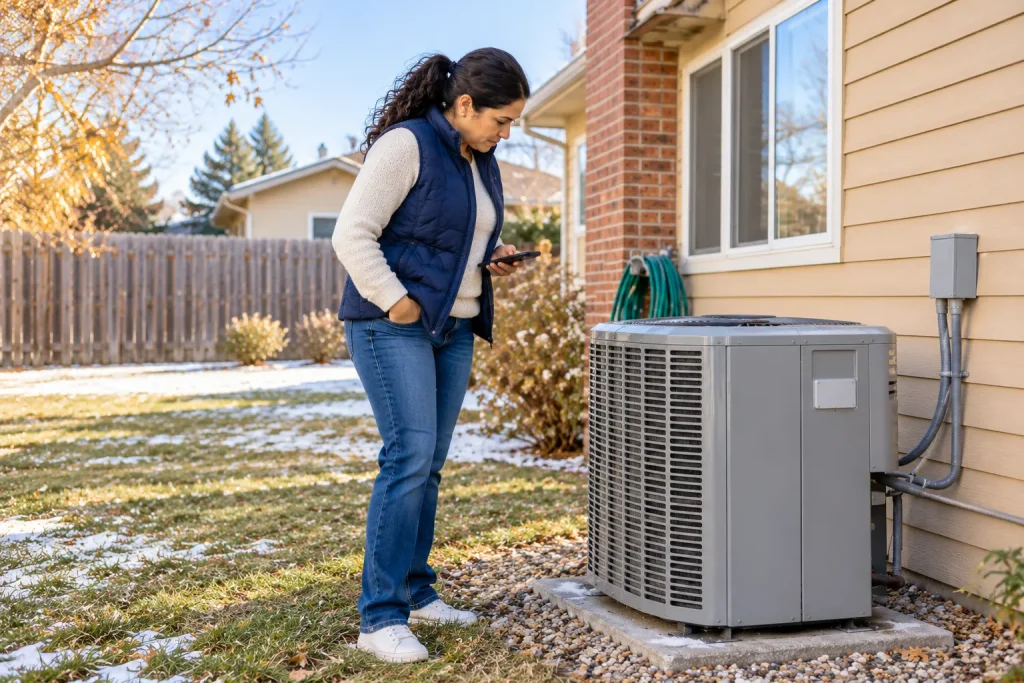
The right winter care depends on what the outdoor unit does. Match yours to a row below.
| What you have | Cover it in winter? | What to do instead |
| Cooling-only central AC (with a gas furnace) | Not needed. A breathable top-only cover is optional if leaves and sticks fall on it | Clear debris, brush off heavy snow, leave the sides open |
| Heat pump | Never use a solid cover | Keep 18 inches clear on all sides, brush snow off the top, watch for ice |
| Dual fuel (heat pump plus furnace) | Same as a heat pump | Same as a heat pump |
| Ductless mini-split | Depends. Many mini-splits heat | If it heats, treat it like a heat pump |
Why a full cover usually does more harm than good
It traps moisture. A wrap holds in condensation, and the unit can’t dry out. That feeds rust on the cabinet and mold around the coil.
It blocks airflow. Your unit needs air moving around it to stay dry, even when it’s idle. A heat pump that’s running under a wrap can also overheat, which is a safety risk.
It gives pests a warm place to nest. Mice and birds like a sheltered spot, and mice chew wiring. You usually find out in spring, when the AC won’t start.
When a cover can make sense
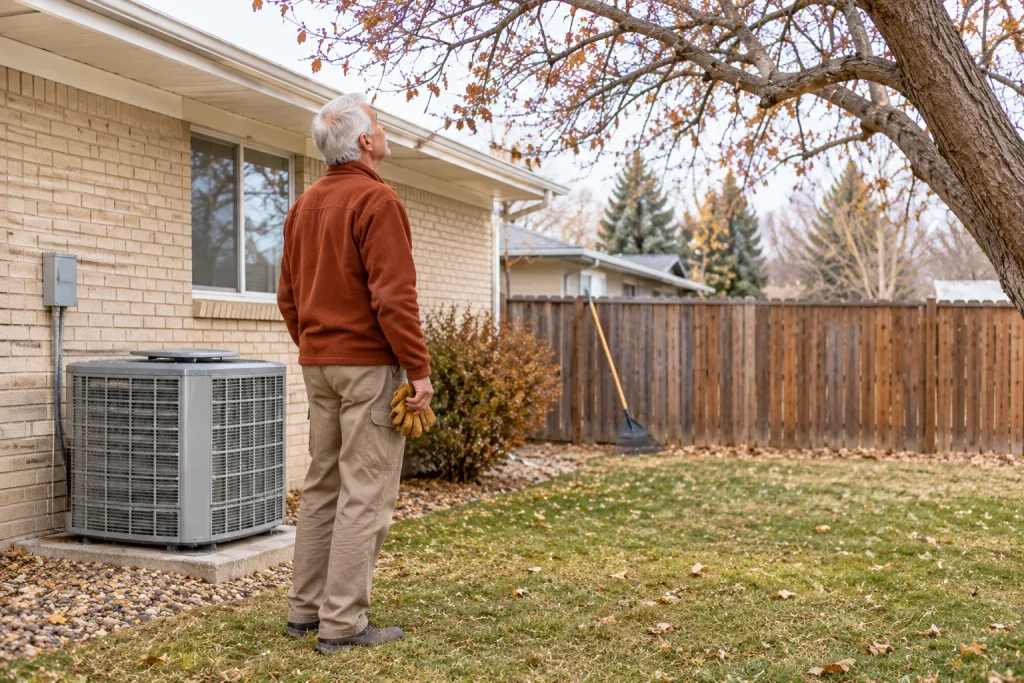
A cover earns its place in a few cases, and only on a cooling-only unit.
- Trees overhead. If leaves, sticks or seed pods fall on the fan opening, a top-only cover or a sturdy board on top keeps them out.
- Icicles from the roof edge. If the unit sits under an eave, falling ice can hit the fan guard. A solid top shield helps.
- A manufacturer accessory. Some brands make a top accessory built to protect the unit without choking airflow. Trane offers a WeatherGuard top for certain models. Ask us whether one fits yours.
If you cover it, cover the top only, leave the sides open, use a breathable cover and clean out any debris first. Strap it down. Front Range wind can shift loose weights and blow lighter covers off. Take it off before the first cooling day.
What to do instead: a safe winter checklist
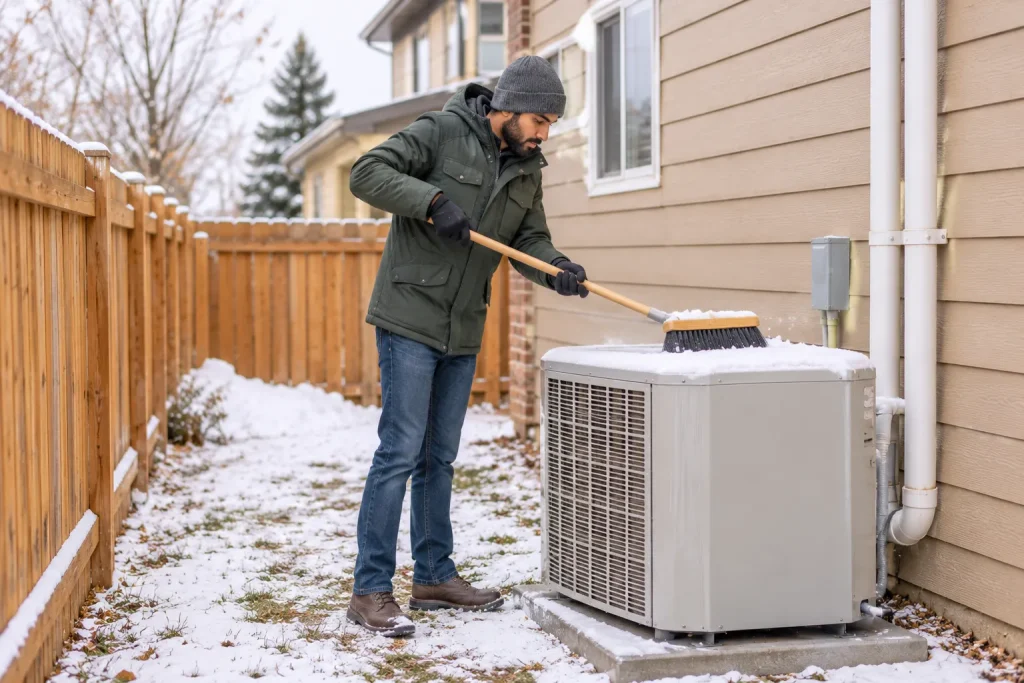
These steps stay outside the unit. Don’t open the cabinet or touch the wiring.
- Confirm what you have. Use the table above. If you’re unsure, ask us.
- Don’t run the AC to test it. Running cooling when it’s below about 60 to 65 degrees can harm the unit, according to Trane.
- Clear the area. Pick leaves, sticks and trash off the top and base, and trim back branches hanging over the unit. Keep 18 inches of open space around it.
- Brush off heavy snow. Use a soft broom, never a shovel edge or hammer. Heat pump owners should do this after each storm. Cooling-only owners can let snow melt on its own.
- Check your furnace vents. If you have a high-efficiency furnace, its white PVC intake and exhaust pipes often sit near the outdoor unit. Make sure drifts haven’t buried them.
- Plan for spring. Remove any cover, clear debris, and change the indoor filter. Our online shop carries filters. Our guide to preparing your AC for summer in Colorado covers the rest.
Why Front Range winters are easy on a bare AC unit
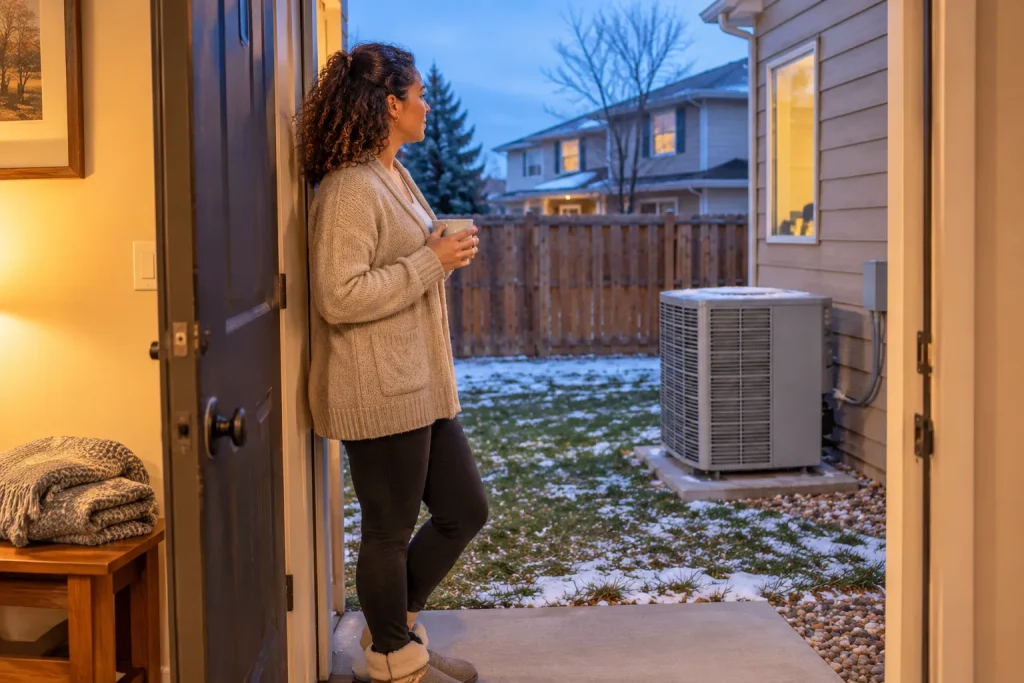
Denver averages about 7.4 inches of snow in November, and the first measurable snow of the season usually arrives around October 19, per the National Weather Service records CBS Colorado cites. Snow here often melts off between storms, so a cooling-only unit rarely sits wet for long.
Big day to night temperature swings can cause condensation inside a sealed wrap, which is the problem you’re trying to avoid. In spring, cottonwood fluff clogs outdoor coils across the north metro, so you want a clear unit before cooling season, not one that’s been bagged all winter. Hail season runs May to July, and a winter cover won’t be on by then anyway.
Housing matters too. Condensers on tight side yards, common on newer Brighton and Commerce City lots, can end up in a drift. Many 1960s homes in Northglenn, Thornton and Westminster have the unit tucked beside the house under an eave, where falling icicles are the main worry. If you have a heat pump, read do heat pumps work in Colorado for how it handles winter.
When to call Comfort Pros
Call if you see ice building on a heat pump along with odd noises, a bent fan guard, a leaning or sunken unit, rust, oily residue on the lines, or signs that rodents have moved in. Call too if you can’t tell whether your system is an AC or a heat pump. A technician can identify the unit, check the coil, electrical connections and refrigerant side, and tell you plainly whether a cover accessory fits. Refrigerant and wiring are not homeowner jobs.
If you have a cooling-only AC and a few leaves on top, you don’t need us. Brush it off and move on. When spring comes, book a tune-up online and we’ll look the system over before the first hot week. See our cooling services and heat pump services for what we repair and install, and our fall HVAC maintenance checklist for the rest of your seasonal prep.
Frequently asked questions
Should I cover my AC unit in winter in Colorado?
Usually not. Outdoor units are built to handle Colorado snow and cold. A breathable, top-only cover is optional on a cooling-only unit if leaves and sticks fall on it.
Can I cover a heat pump in winter?
No. A heat pump heats your home in winter, and a solid cover blocks the airflow it needs. Keep it clear of snow and debris instead.
What kind of AC cover is safe to use?
Choose a breathable, top-only cover that leaves the sides open, and strap it down. Avoid plastic tarps and full wraps, which trap moisture and invite pests.
Should I run my AC in winter to keep it working?
No. Running cooling in cold weather can damage the unit. Winter is its rest period, and a spring tune-up is all it needs.
Do I need to clear snow off my AC unit?
On a heat pump, yes. Brush heavy snow off the top and keep 18 inches clear around it. On a cooling-only AC, you can let it melt.
Not sure what’s sitting outside your house?
Book a tune-up online or call us at (303) 945-4319. We’re Comfort Pros Heating and Air Conditioning, family owned, with 5.0 from 678 Google reviews.
